Garden & Compost
Noosa Council is committed to diverting garden waste from landfill and reducing greenhouse gases by recycling garden waste.
Council provides a fortnightly garden waste service to residents in urban areas and offer an optional service for some rural areas and urban commercial premises. Garden waste bin collection charges (see page 28) are included in the Council rates notice.
If you cant compost at home, share your food waste with others!
Visit peels.app Connect for free with people in your area to share or receive food scraps and turn waste into compost.
Order a Garden Waste Bin (240L or 360L)
To request a 240L garden waste bin or a larger 360L garden waste bin (charges apply), please use Council's Online Waste Requests.
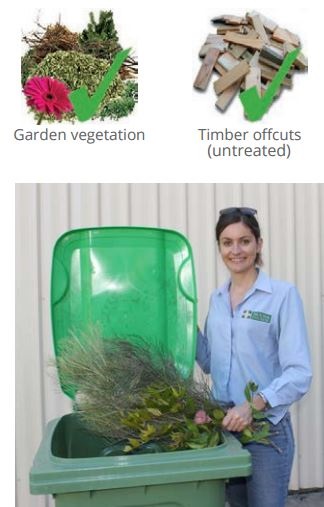
What can go in
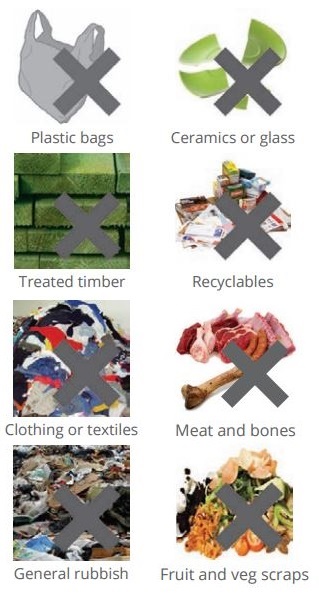
What can't go in
Exemptions
Rural Properties, Units, and Small Properties: Properties under 400 sqm are not required to use the garden waste recycling bin service but can opt-in if within 5 km of a service area. To check if your property is within a service area or close proximity (within 5 km), refer to Council’s Interactive Mapping.
Duplex Properties: Combined areas under 400 sqm may qualify for an exemption (e.g., 1/42 and 2/42 Bluefin Court).
Professional Gardener Collection: Residents whose garden waste is collected by a professional gardener may be eligible for an exemption. Complete and return the Garden Waste Service Exemption application.(PDF, 82KB)
Mulch
Free single grind mulch is available from the Cooroy and Pomona waste transfer stations, subject to supply availability. Mulch is currently not available for collection at Noosa Transfer Station.
Double grind mulch is currently not available at any of our transfer stations.
Free single grind mulch can be collected at the Cooroy Transfer Station, 8am-1pm Saturday, Sunday & Monday, and the Pomona Transfer Station, 8am-1pm Friday, Saturday & Sunday.
Noosa residents can access up to 3 cubic meters of single-ground mulch for free. Commercial operators can also purchase single or double-grind mulch (when available). Click here for mulch availability and locations.
Composting and Worm Farms
For further help to reduce organic waste, view:
Composting and Worm Farms
Peppers Resort & Villa - Food scraps collection trial
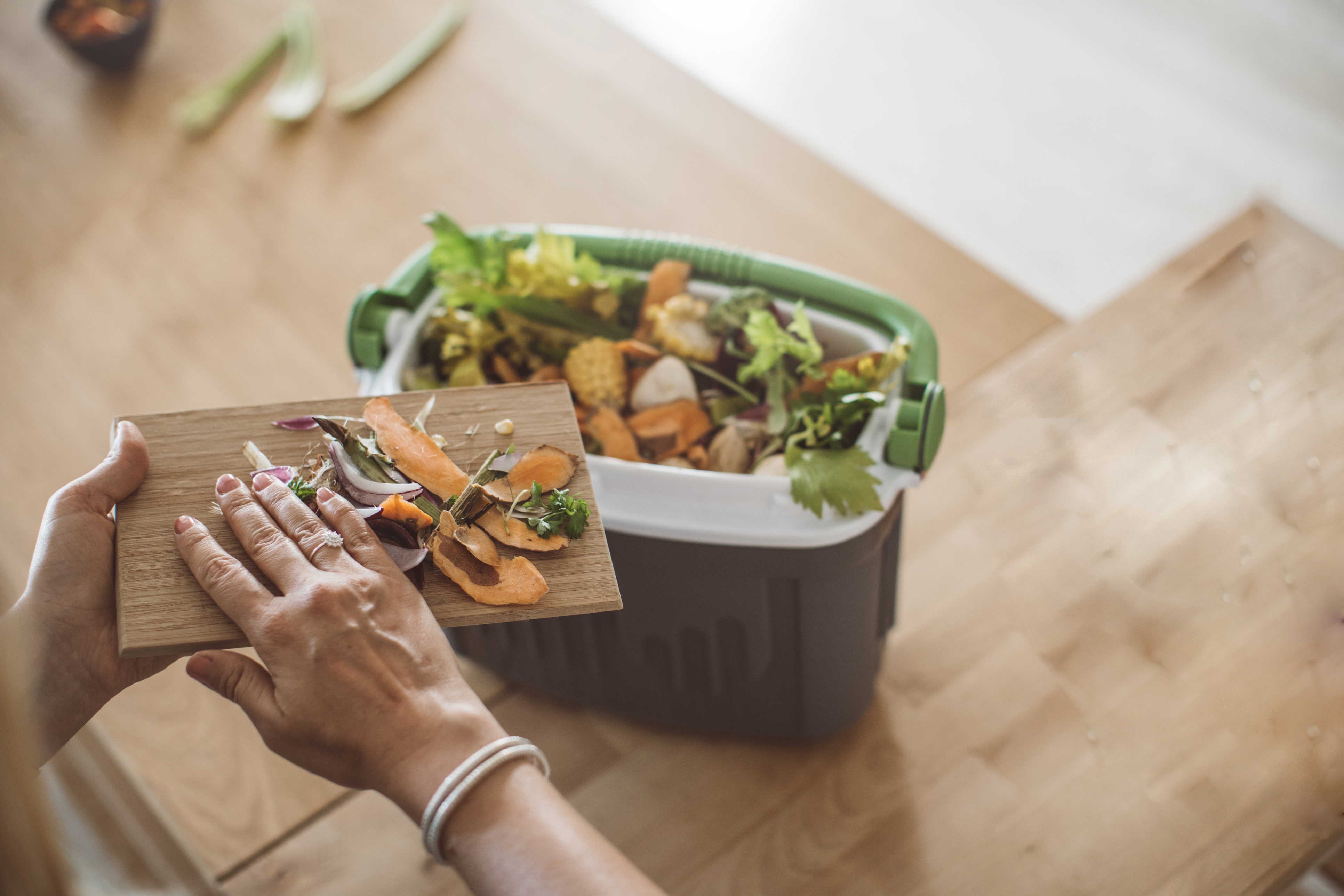

Noosa Council is partnering with the Council of Mayors, South East Queensland to trial a food scraps collection service at Peppers Noosa Resort & Villas. The trial will run during 2026 and is proudly funded by the Queensland Government. This trial is part of a regionally coordinated body of work, across four local Councils - Brisbane, Gold Coast, Sunshine Coast and Noosa.
Peppers Noosa Resort & Villa has been selected for the trial due to its strong sustainability practices and its mix of holiday apartments—an ideal setting for testing food organics recycling in multi‑unit dwellings with a transient population.

How the trial works
- Peppers guest rooms will be provided with a slimline 5L kitchen caddy and compostable liners, allowing guests to collect food scraps during their stay.
- Caddies are being rolled out to guest rooms in stages over several weeks. If your room doesn’t have a caddy yet, it will be provided soon.
- Collected food scraps are taken to Earthborn Australia, a family-owned organics recycling facility on the Sunshine Coast that turns food and green waste into high-quality compost, soils, mulches and potting mixes.
The trial will help Noosa Council understand how visitors manage food waste, what works well, and what challenges may exist.
What can go in and what should stay out
Why we’re doing this
The trial aims to:
- Reduce the amount of food waste sent to landfill
- Improve resource recovery across high‑tourism apartment buildings
- Test different approaches to food organics recycling in multi‑unit dwellings
- Gather feedback to guide future waste services and regional planning
- Support Noosa Council’s Waste Plan 2023–2028 and Destination Management Plan
Frequently Asked Questions - Peppers Resort & Villa Food Scraps Collection Trial
What can I put in my food scraps caddy?
Most food items including fruit and veg scraps, coffee grounds, tea leaves, eggshells, bread, pasta, meat and seafood, dairy products and certified compostable takeaway packaging including: Wooden cutlery, paper straws, compostable coffee cups (but not the lids – please put them in the rubbish bin), plates, bowls and napkins.
How do I know if my cup or container is compostable?
Look for the commercially compostable certification symbols such as AS5810 or AS4736. Biopak is the brand name of compostable takeaway packaging commonly used in Noosa.
What can’t go in my food scraps caddy?
Plastic, glass, liquids, or packaging unless it is certified compostable. Packaging without the AS5810 or AS4736 symbols cannot go into the caddy. No coffee cup lids please.
Can I put hot food scraps or hot tea leaves/coffee grounds into my kitchen caddy?
No. Please allow hot food scraps, liquids, or tea leaves to cool before placing them into your kitchen caddy. The caddy liners are made from cornstarch, which can soften or melt when exposed to high temperatures. Allowing hot items to cool helps prevent the liner from breaking down prematurely and ensures your caddy stays clean and easy to empty.
Do I need to use only a compostable liner in my caddy?
Yes, using the supplied compostable liner in your caddy helps keep the caddy clean and makes it easier for cleaning staff to empty. You can find additional compostable bin liners under the sink in your room. Please don’t use regular plastic bags as these cannot be composted. Additional compostable liners can be requested from housekeeping.
What if my compostable caddy liner rips?
The caddy liners are made from waste corn starch and are fully biodegradable, compostable, and plastic free. If your caddy is very full or contains sharp food waste or compostable takeaway packaging simply line your caddy with two compostable liners for added strength or consider leaving your compostable takeaway packaging beside your caddy for collection.
Theres not enough room in my food scraps caddy for the compostable takeaway packaging and coffee cups.
If your kitchen caddy fills up quickly, especially with larger compostable items like bamboo cutlery, paper straws, takeaway containers or coffee cups (without lids), simply place these compostable items neatly beside the caddy for collection. These materials are all accepted in the food‑scrap recycling, but their size can make them tricky to fit in the smaller bin. Leaving them next to the caddy keeps things tidy and ensures everything is collected and composted properly.
What if my food scraps caddy gets full?
Simply remove the caddy liner and tie the bag ends together. Contact reception to arrange collection. You may also choose to place the full food scraps bag in your fridge or freezer (if there is room). Alternatively, you can take your food scraps to the food waste bin with the maroon lid in the lower carpark of the pacific building (opposite the main swimming pool).
I’m concerned my food scraps bin will smell or attract pests.
Using your kitchen caddy shouldn’t create smells or attract pests. It’s the same food waste that would normally go into the general rubbish—now it’s just being separated for recycling. Empty the caddy regularly, use the compostable liners provided, and keep it in a cool spot (or even in the fridge) if you’re sensitive to odours. The caddy’s secure lid helps prevent pests, making it a clean and convenient way to recycle food scraps during your stay.
Where do the food scraps go?
All food scraps collected during the trial will be composted at Earthborn Australia’s commercial facility. Earthborn is a long‑running, family‑owned organics recycling facility on the Sunshine Coast that turns food and green waste into high‑quality compost, soils, mulches and potting mixes. The compost they produce is used by growers, farmers, landscapers, councils and nurseries to improve soil health, boost water retention and support more sustainable planting and agriculture.
Why compost food scraps?
Composting reduces landfill waste, cuts greenhouse gas emissions, and turns food scraps into a valuable soil product.